Monday, June 30, 2008

Quotes by Swami Rama


"The Sanskrit word for 'action' is 'karma', derived from the root 'kri' which means 'to do'.
One does action and gets remunerated for it, in turn transferring 
this remuneration to others for work done by them. 
Thus, fruit has arisen out of action, and action out of fruit.
From time immemorial, life has been conducted in this manner.
This is called the wheel of karma. 
To act with the motive of gaining fruits is to invite bondage. 
Relinquishing the fruits frees us from all miseries."

"Love and attachment are two different things. Love means giving
selflessly, excluding none and including all. Attachment is possessing
something. In reality, it is bondage. There is a vast difference
between love and attachment. Western people say, "How can you live
without attachment?" Well, you can live wonderfully without
attachment. You can live on love. Love and attachment are poles
apart. One is the cause of freedom. The other is the cause of bondage."

"First your teacher introduces you to the real teacher within you, 
which is called your own conscience. Then you start counseling 
within: "I should not do this because it is not helpful. This is 
creating an obstacle for me." The teacher inspires you, gives you 
strength--that strength which is already within you. The teacher 
introduces you to your own conscience and says, "My child, look 
within and be guided by this."

"You really do not need to know many things, 
but you definitely need to practice what you know."

Source: http://www.iloveulove.com/wisdom/wisdomquotes2.htm

On meditation...

"When you practice meditation, 
nitially you come in touch with yourself and all your thought patterns;
you come to understand your inner dialogue. 
Then, you learn to discriminate—to select and reject; 
and finally, you learn how to work with yourself."

On searching for God...

"You are searching for something without understanding that it is within you. 
Search within. This is a direct approach. 
Do not search for God outside. God is already within you. 
When you come to know that God dwells within you, 
then your life will totally change and you will be transformed. 
When you have perfect control over the modifications of the mind, 

you will attain the highest level of consciousness or samadhi.” 


From: Yoga the Sacred Science, volume one by Swami Rama


On who we are...

"I have come to share my joy truthfully with you.
I say, ye human beings, among all the species on the earth, you are the greatest.
You are the greatest for you can change your destiny, you can build your destiny,

you can enlighten yourself.”


From: Conscious Living: A Guidebook for Spiritual Transformation by Swami Rama


On God, the One unborn...

“His tray of lapis forms the sky where sun and moon as lanterns lie;
Like precious gems the stars are strewn upon His tray beside the moon.
The perfume of the scented trees is carried by the gentle breeze
And blossoms of the earth adorn His holy feet,

the One unborn." 

Sri Guru Granth Sahib Volume I, in English Verse Transcreated by Swami Rama

Source: http://tantra-massage.co.za/pages/quotes.php

The poor long for riches, the rich long for heaven, but the
  wise long for a state of tranquility.

Source: http://www.inspirational-quotations.com/peace-quotes.html

Sunday, June 29, 2008

Invocation - From Advaita Vedanta Standpoint

In Brahman, there is not separation.

Then, who is there to see?
The Reality, which is without encumbrances, is, itself, the most natural state of samadhi. 
It is in that state that the sorrow and scourge of worldly life have their end.
That which is the end of attachment
Is to be understood as the final doctrine.
It is also verified by the Vedas and the Guru,
And the actual experience of the Self.
Enough with this.
Brahman is that Eternity in which there is no illusion or maya.
The one who has experienced it
Will realize the meaning of this.
The one thing that we must do
Is to discard concepts projected by the mind, at any level,
Through Self-Realization,
And then there is the eternal paradise of Bliss.

— - Sant Ramadasa (Samarth Ramdas) in his Dasboadh

Saturday, June 28, 2008

Sri Ramana Maharshi's Enlightenment, July 17 1896

This is a first person account by Ramana of his enlightenment: “One day I was alone in the first floor of my uncle’s house. I was in my usual state of health. But a sudden and unmistakable fear of death seized me. I felt I was going to die. Why I should have so felt cannot now be explained by anything else in the body. I did not however trouble myself to discover if the fear was well grounded. I did not care to consult doctors or elders or even friends. I felt I had to solve the problem myself then and there.”

“The actual inquiry and discovery of ‘Who am I?’ was over on the very first day, after a short time. Instinctively I held my breath and began to dive inward with my inquiry into my own nature … I stretched myself like a corpse and it seemed to me that my body had actually become rigid—‘I’ was not dead—‘I’ was, on the other hand conscious of being alive, in existence. So the question arose in me, “What was this ‘I’?” I felt that it was a force or current working, despite the rigidity or activity of the body, though existing in connection with it. It was that current or force or center that constituted my personality, that kept me acting, moving, etc. The fear of death dropped off. I was absorbed in the contemplation of that current. So further development or activity was issuing from the new life and not from any fear.”

What happened after this was narrated by Ramana to Narashima Swami.

“That changed my mental attitude and habits. I had formerly some preferences and aversions. All these dropped off and all food was swallowed with equal indifference. I would put up with every burden imposed on me at home, every slight at my expense by the boys. Studies and duties became a matter of utter indifference and I was going through studies turning over pages mechanically.”

After his enlightenment, there was no change in the state of Ramana’s steady Self-abidance.


Source: http://www.satramana.org/html/who_am_i_.htm

Thursday, June 26, 2008

Advaita Vedanta Basics - Ignorance (Vigyanamaya kosha) condt. - Vivek Choodamani / Chudamani

192. The disciple questioned: Be it through delusion or otherwise that the Supreme Self has come to consider Itself as the Jiva, this superimposition is without beginning, and that which has no beginning cannot be supposed to have an end either.

193. Therefore the Jivahood of the soul also must have no end, and its transmigration must continue for ever. How then can there be Liberation for the soul ? Kindly enlighten me on this point, O revered Master.

194. The Teacher said: Thou hast rightly questioned, O learned man ! Listen therefore attentively: The imagination which has been conjured up by delusion can never be accepted as a fact.

195. But for delusion there can be no connection of the Self – which is unattached, beyond activity and formless – with the objective world, as in the case of blueness etc., with reference to the sky.

196. The Jivahood of the Atman, the Witness, which is beyond qualities and beyond activity, and which is realised within as Knowledge and Bliss Absolute – has been superimposed by the delusion of the Buddhi, and is not real. And because it is by nature an unreality, it ceases to exist when the delusion is gone.

197. It exists only so long as the delusion lasts, being caused by indiscrimination due to an illusion. The rope is supposed to be the snake only so long as the mistake lasts, and there is no more snake when the illusion has vanished. Similar is the case here.


Source: Vivek Choodamani

Tuesday, June 24, 2008

An Intro of Holy Trio Group

You are here to discuss and share your spiritual journey in the light of Holy Trio i.e. Bhagwan Sri Ramakrishna, Sri Sri Maa Sarada Devi and Swami Vivekananda.
 
As we all know that they are the role model for every Religion and also the pride of Scientific Hinduism which establishes with all its said Eternal Truth.
 
We invite all to participate and share also to educate themselves in their Spiritual Journey.


A questionnaire will be sent to you. Only after reciept of your reply to questionnaire you will be admitted to the Family of Devotees of Holy Trio. 

We invite your practical suggestions and active cooperation. The more we engage ourselves in this 'venerable job' of infusing the spirit of GOODNESS in the society with the living message of Holy Trio the more blessed our life becomes.Kindly circulate among your friends and encourage and stimulate them also to take part in this interesting and serious study group. Let us all come together under the holy Umbrella of Swami Vivekananda and "Work out the whole problem like lions".
 
Indianspirituality comments:

I am a part of this group and believe me that this is the first group which I have came accross that is so dedicated to spirituality and teachings of the holy trio. There are absolutely no personal attacks, no rubbish talks, no out of track arrogant comments. The quality of the posts are expectional. Anybody serious about their spiritual progress can definately benifit from this group.


Visit this Group

Sunday, June 22, 2008

Suicide after the vision of God - Sri Ramarkishna

A Devotee: "I am frightened to hear of the suicide."

Sri Ramakrishna: "Suicide is a heinous sin, undoubtedly. A man who kills himself must return again and again to this world and suffer its agony.

"But I don't call it suicide if a person leaves his body after having the vision of God. There is no harm in giving up one's body that way. After attaining Knowledge some people give up their bodies. After the gold image has been cast in the clay mould, you may either preserve the mould or break it.

"Many years ago a young man of about twenty used to come to the temple garden from Baranagore; his name was Gopal Sen. In my presence he used to experience such intense ecstasy that Hriday had to support him for fear he might fall to the ground and break his limbs. That young man touched my feet one day and said: 'Sir, I shall not be able to see you any more. Let me bid you good-bye.' A few days later I learnt that he had given up his body.

Source: Sri Ramakrishna Jivan Charitra (Gospel of Sri Ramakrishna) by M

http://www.belurmath.org/gospel/index.htm
Chapter 7

Saturday, June 21, 2008

Three classes of devotees & bhakti - Sri Ramakrishna

Three classes of devotees

"As worldly people are endowed with sattva, rajas, and tamas, so also is bakti characterized by the three gunas.  


"Do you know what a worldly person endowed with sattva is like? Perhaps his house is in a dilapidated condition here and there. He doesn't care to repair it. The worship hall may be strewn with pigeon droppings and the courtyard covered with moss, but he pays no attention to these things. The furniture of the house may be old; he doesn't think of polishing it and making it look neat. He doesn't care for dress at all; anything is good enough for him. But the man himself is very gentle, quiet, kind, and humble; he doesn't injure anyone.  

"Again, among the worldly there are people with the traits of rajas. Such a man has a watch and chain, and two or three rings on his fingers. The furniture of his house is all spick and span. On the walls hang portraits of the Queen, the Prince of Wales, and other prominent people; the building is whitewashed and spotlessly clean. His wardrobe is filled with a large assortment of clothes; even the servants have their livery, and all that.  

"The traits of a worldly man endowed with tamas are sleep, lust, anger, egotism, and the like.

Three kinds of bhakti


"Similarly, bhakti, devotion, has its sattva. A devotee who possesses it meditates on God in absolute secret, perhaps inside his mosquito net. Others think he is asleep. Since he is late in getting up, they think perhaps he has not slept well during the night. His love for the body goes only as far as appeasing his hunger, and that only by means of rice and simple greens. There is no elaborate arrangement about his meals, no luxury in clothes, and no display of furniture. Besides, such a devotee never flatters anybody for money.  

"An aspirant possessed of rajasic bhakti puts a tilak on his forehead and a necklace of holy rudraksha beads, interspersed with gold ones, around his neck. (All laugh.) At worship he wears a silk cloth.

"A man endowed with tamasic bhakti has burning faith. Such a devotee literally extorts boons from God, even as a robber falls upon a man and plunders his money. 'Bind! Beat! Kill!'-that is his way, the way of the dacoits."

Source: Sri Ramakrishna Jivan Charitra (Gospel of Sri Ramakrishna) by M

http://www.belurmath.org/gospel/index.htm
Chapter 6

Friday, June 20, 2008

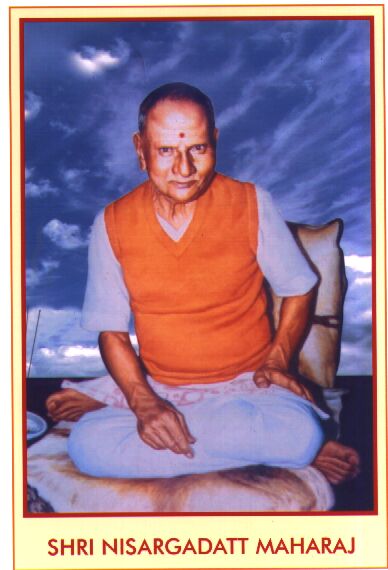
Quotes by Nisargadatta Maharaj


"We are the creators and creatures of each other, 

causing and bearing each other's burden."

I find that somehow, by shifting the focus of attention, I become the very 
thing I look at, and experience the kind of consciousness it has; I become 
the inner witness of the thing. I call this capacity of entering other 
focal points of consciousness, love; you may give it any name you like. 
Love says "I am everything". Wisdom says "I am nothing". Between the two, 
my life flows. Since at any point of time and space I can be both the 
subject and the object of experience, I express it by saying that I am 
both, and neither, and beyond both. (269)

 
Unless you make tremendous efforts, you will not be convinced that 
effort will take you nowhere. The self is so self-confident that 
unless it is totally discouraged it will not give up. Mere verbal 
conviction is not enough. Hard facts alone can show the absolute 
nothingness of the self-image. (523) 

A quiet mind is all you need. All else will happen rightly, once your 
mind is quiet. As the sun on rising makes the world active, so does 
self-awareness affect changes in the mind. In the light of calm and 
steady self-awareness, inner energies wake up and work miracles 
without any effort on your part. (311) 

"The world is like a sheet of paper on which something is typed. The 
reading and the meaning will vary with the reader, but the paper is 
the common factor, always present, rarely perceived. When the ribbon 
is removed, typing leaves no trace on the paper. So is my mind - the 
impressions keep on coming, but no trace is left."(225) 


When you demand nothing of the world, nor of God, when you want nothing, 
seek nothing, expect nothing, then the Supreme State will come to you 
uninvited and unexpected. (195)


"All that a guru can tell you is: 
'My dear Sir, you are quite mistaken aboutyourself.
You are not the person you take yourself to be.'" (443)


"There is no such thing as a person. 
There are only restrictions and limitations. 
The sum total of these defines the person. (...) 
The person merely appears to be, like 
the space within the pot appears to have the shape and volume
and smell of the pot."


By all means attend to your duties. Action, in which you are not 
emotionally involved and which is beneficial and does not cause 
suffering will not bind you. You may be engaged in several directions 
and work with enormous zest, yet remain inwardly free and quiet, with 
a mirror like mind, which reflects all, without being affected. (50)


"To expound and propogate concepts is simple, 
to drop all concepts is difficult and rare"


"There is nothing to practise. To know yourself, be yourself. To be 
yourself, stop imagining yourself to be this or that. Just be. Let 
your true nature emerge. Don't disturb your mind with seeking"

I am That PG 259 (Chetana version)


The consciousness in you and the consciousness in me, apparently two, really
one, seek unity and that is love. (70)


In people with devotion, 
even with limited intellect, 
the intellect is not making mischief, 
as it is here.

This is the place where the intellect gets annihilated.

Consciousness and the Absolute, chapter 32


There was a house, and in the house there was a person; now the 
person is gone and the house is demolished. The sum total is, 
whatever experiences you have, whether for a day or for years, it is 
all illusion. The experiences begin with knowingness.
What is the most ingrained habit you have? It is to say "I Am'. This 
is the root habit. Words and experiences are unworthy of you. This 
habit of experiencing will not go until you realize that all this 
domain of the five elements, are unreal, This "I Amness" is itself unreal.

Consciousness and the Absolute, pg. 48

M: Start with the body. From the body you get the knowledge of `I 
am'. In this process you become more and more subtle. When you are in 
a position to witness the knowledge `I am', you have reach the 
highest. In this way you must try to understand, and the seeds of 
knowledge will sprout in you.

When you come to the end of material world-knowledge, at that stage 
you transcend the observer and the observed. That means that you are 
in a true state of being-ness. Thereafter, you enter the state of 
transcending being-ness, where the identities of the observer and 
observed disappear.

Suppose somebody abuses you and you find out who it is. Is it the 
body? It is not the body. Then what could it be? Finally you come to 
the conclusion that it is spontaneously happening out of whatever 
that body is. You will not attribute it to any individual. When your 
individuality is dissolved, you will not see individuals anywhere, it 
is just a functioning in consciousness. If it clicks in you, it is 
very easy to understand. If it does not, it is most difficult. It is 
very profound and very simple, if understood right. What I am saying 
is not the general run of common spiritual knowledge.

When you reach a state when body is transcended, mind is transcended 
and consciousness is also transcended; from then on all is merely 
happening out of consciousness, which is the outcome of the body, and 
there is no authority or doer-ship. When a sound is emanating out of 
a body, it is not that somebody is talking, it is just words 
emanating, just happening, not doing. 

If you understand the basis thoroughly, 
it will lead you very far, deep into spirituality.

The Absolute alone prevails. There is nothing but the Absolute. The 
un-manifest manifested itself, that manifest state is Guru and it is universal.

Who is the one who recognizes this body-mind? This `I Am-ness' which 
recognizes the body-mind is without name and form, it is already there.

June 27, 1981 Page 108
Consciousness and the Absolute


Source: http://nisargadatta.net/quotes1.html

Thursday, June 19, 2008

Sri Nisargadattaji Maharaj

When I met my Guru, he told me: "You are not what you take yourself 
to be. Find out what you are. Watch the sense 'I am', find your real 
Self." I obeyed him, because I trusted him. I did as he told me. All 
my spare time I would spend looking at myself in silence. And what a 
difference it made, and how soon! 

My teacher told me to hold on to the sense 'I am' tenaciously and not 
to swerve from it even for a moment. I did my best to follow his 
advice and in a comparatively short time I realized within myself the 
truth of his teaching. All I did was to remember his teaching, his 
face, his words constantly. This brought an end to the mind; in the 
stillness of the mind I saw myself as I am -- unbound. 

I simply followed (my teacher's) instruction which was to focus the 
mind on pure being 'I am', and stay in it. I used to sit for hours 
together, with nothing but the 'I am' in my mind and soon peace and 
joy and a deep all-embracing love became my normal state. In it all 
disappeared -- myself, my Guru, the life I lived, the world around 
me. Only peace remained and unfathomable silence.

Sri Nisargadattaji Maharaj

Source: http://www.nisargadatta.net/

Wednesday, June 18, 2008

Identity of Brahman and Śakti - Sri Ramakrishna

"Thus Brahman and Śakti are identical. If you accept the one, you must accept the other. It is like fire and its power to burn. If you see the fire, you must recognize its power to burn also. You cannot think of fire without its power to burn, nor can you think of the power to burn without fire. You cannot conceive of the sun's rays without the sun, nor can you conceive of the sun without its rays.  

"What is milk like? Oh, you say, it is something white. You cannot think of the milk without the whiteness, and again, you cannot think of the whiteness without the milk.  

"Thus one cannot think of Brahman without Śakti, or of Śakti without Brahman. One cannot think of the Absolute without the Relative, or of the Relative without the Absolute.  

"The Primordial Power is ever at play. She is creating, preserving, and destroying in play, as it were. This Power is called Kāli. Kāli is verily Brahman, and Brahman is verily Kāli. It is one and the same Reality. When we think of It as inactive, that is to say, not engaged in the acts of creation, preservation, and destruction, then we call It Brahman. But when It engages in these activities, then we call It Kāli or Śakti. The Reality is one and the same; the difference is in name and form.

"It is like water, called in different languages by different names, such as 'jal', 'pani', and so forth. There are three or four ghats on a lake. The Hindus, who drink water at one place, call it 'jal'. The Mussalmans at another place call it 'pani'. And the English at a third place call it 'water'. All three denote one and the same thing, the difference being in the name only. In the same way, some address the Reality as 'Allah', some as 'God', some as 'Brahman', some as 'Kāli', and others by such names as 'Rama', 'Jesus', 'Durga', 'Hari.' "

Source: Sri Ramakrishna Jivan Charitra (Gospel of Sri Ramakrishna) by M

http://www.belurmath.org/gospel/index.htm


Tuesday, June 17, 2008

Advaita Vedanta BAsics - Mental Sheath (Vivek Choodamani / Chudamani)

167. The organs of knowledge together with the mind form the mental sheath – the cause of the diversity of things such as "I" and "mine". It is powerful and endued with the faculty of creating differences of name etc., It manifests itself as permeating the preceding, i.e. the vital sheath.

168. The mental sheath is the (sacrificial) fire which, fed with the fuel of numerous desires by the five sense-organs which serve as priests, and set ablaze by the sense-objects which act as the stream of oblations, brings about this phenomenal universe.

169. There is no Ignorance (Avidya) outside the mind. The mind alone is Avidya, the cause of the bondage of transmigration. When that is destroyed, all else is destroyed, and when it is manifested, everything else is manifested.

170. In dreams, when there is no actual contact with the external world, the mind alone creates the whole universe consisting of the experiencer etc. Similarly in the waking state also; there is no difference. Therefore all this (phenomenal universe) is the projection of the mind.

171. In dreamless sleep, when the mind is reduced to its causal state, there exists nothing (for the person asleep), as is evident from universal experience. Hence man’s relative existence is simply the creation of his mind, and has no objective reality.

172. Clouds are brought in by the wind and again driven away by the same agency. Similarly, man’s bondage is caused by the mind, and Liberation too is caused by that alone.

Source: Vivek Choodamani

Monday, June 16, 2008

Python – the Ninth Guru of Dattatreya

Lord Dattatreya had 24 Gurus. It was the satvik vision of the Lord that made even a python his Guru. It is an example of extracting positive from everything. Here is his ninth Guru.

My ninth guru is the python who catches and eats its prey, and then doesn't hunt again for a long time. It taught me that once my need has been met, I must be satisfied and not make myself miserable running after the objects of my desire. (Source: The Himalayan Masters: A Living Tradition by Pandit Rajmani Tigunait, PhD)


Another Interpretation


Following the example of the python, one should give up material endeavors and accept for one’s maintenance food that comes of its own accord, whether such food be delicious or tasteless, ample or meager.

If at any time food does not come, then a saintly person should fast for many days without making endeavor. He should understand that by God’s arrangement he must fast. Thus, following the example of the python, he should remain peaceful and patient.

A saintly person should remain peaceful and materially inactive, maintaining his body without much endeavor. Even though possessed of full sensual, mental and physical strength, a saintly person should not become active for material gain but rather should always remain alert to his actual self-interest.

Source: www.hindu-blog.com

Posted with kind permission of the owner of Hindu Blog

Sri Ramana Maharshi - Leaving home (મહાભિનિષ્ક્રમણ)

If you cannot read the article, than copy paste into your word document: Font Arial Unicode MS required.

(Created by itrans scheme: to read more about itrans click the label itrans on the right panel) 

એમના જીવનની પેલી મૃત્યુ જેવી અવસ્થાની અનુભૂતિ એમને ફરી થવા માંડી. ભગવાન અરૂણાચલની મધુમય મૂર્તિ એમની મનની આંખ આગળ ઊભી રહીને એમના અંતરને આકર્ષવા લાગી. એમણે અરૂણાચલનું શરણ લેવાનો સંકલ્પ કર્યો. એ દિવસની ઘટના એવી રીતે એમના જીવનની મહાપરિવર્તનકારી ઘટના બની રહી.


ધ્યાનમાંથી ઊઠીને એમણે પોતાના મોટાભાઈને જણાવ્યું : 

 ‘હું સ્કૂલમાં જવાની તૈયારી કરૂં છું.’

 ‘આજે સ્કૂલમાં જવું છે ?’ ભાઈએ પુછ્યું : ‘કે પછી યોગસાધના કરવી છે ?’

 ‘યોગસાધના નથી કરવી, સ્કૂલમાં જવું છે.’

 ‘તારૂં મન તો યોગસાધના તરફ લાગેલું છે, અભ્યાસમાં કે સ્કૂલમાં નથી લાગ્યું.’

 ‘તો પણ મારે સ્કૂલમાં જવું પડશે. આજે બાર વાગે એક સ્પેશિયલ કલાસ છે.?’

 ‘તો પછી મારું એક કામ કરજે. નીચે પેટીમાં પાંચ રૂપિયા છે. તે લઈને મારી ફી ભરી દેજે. તારી સ્કૂલની બાજુમાં જ મારી કૉલેજ હોવાથી તને કશી મુશ્કેલી નહિ પડે.’

વેંકટરામનના મનમાં પેદા થયેલા વિચાર પ્રવાહોની તેમને ખબર ના પડી. એમણે વેંકટરામનના શબ્દોને સાચા માની લીધા. વેંકટરામને લીધેલા ગૃહત્યાગના નિર્ણયની એ કલ્પના પણ ના કરી શક્યા. વેંકટરામને વિચાર્યું કે ઈશ્વર સાચેસાચ અનુકૂળ છે ને મારી ઉપર પોતાના અનુગ્રહની વર્ષા વરસાવી રહ્યા છે. મારે કોઈ દુન્યવી સ્કૂલમાં નહિ પરંતુ ઈશ્વરની સ્કૂલમાં જવાનું છે. ઈશ્વરે મારે માટે એક સ્પેશિયલ ક્લાસનું આયોજન કર્યું લાગે છે, ને મારે એની ઈચ્છા કે યોજનાનુસાર જીવનનું ઉચ્ચોચ્ચ આધ્યાત્મિક શિક્ષણ મેળવવા માટે આગળ વધવાનું છે.

Source: (શ્રી યોગેશ્વરજી કૃત 'રમણ મહર્ષિ : જીવન અને કાર્ય'માંથી)

Sunday, June 15, 2008

Reasoning of jnanis - Sri Ramakrishna

"The jnanis, who adhere to the non-dualistic philosophy of Vedanta, say that the acts of creation, preservation, and destruction, the universe itself and all its living beings, are the manifestations of Śakti, the Divine Power. If you reason it out, you will realize that all these are as illusory as a dream. Brahman alone is the Reality, and all else is unreal. Even this very Śakti is unsubstantial, like a dream.

"But though you reason all your life, unless you are established in samādhi, you cannot go beyond the jurisdiction of Śakti. Even when you say, 'I am meditating', or 'I am contemplating', still you are moving in the realm of Śakti, within Its power. 


Saturday, June 14, 2008

Advaita Vedanta Basics - Wrong identification is the cause of Suffering - Vivek Choodamani (Chudamani)

162. As long as the book-learned man does not give up his mistaken identification with the body, organs, etc., which are unreal, there is no talk of emancipation for him, even if he be ever so erudite in the Vedanta philosophy.

163. Just as thou dost not identify thyself with the shadow-body, the image-body, the dream-body, or the body thou hast in the imaginations of thy heart, cease thou to do likewise with the living body also.

164. Identifications with the body alone is the root that produces the misery of birth etc., of people who are attached to the unreal; therefore destroy thou this with the utmost care. When this identification caused by the mind is given up, there is no more chance for rebirth.

Source: Vivek Choodamani (Chudamani)

Difference between a monk and house holder saint - A Personal Interpretation

Some people after realizing their true nature prefer to work from behind the curtain. I have heard in a discourse, that even beggars can be realized. We do not notice them. Forget that somebody will bend in front of them.

Society has an allergy to the word 'Guru". Nobody wants to be a disciple but they are ready to offer their suggestions (for free :) acting like a guru).
The most difficult thing is to begin. Initially a toddler in spirituality neither has any faith in the guru, nor in the system which guru is following. Nor does he have much faith in God.

So some saints stay in disguised and behave like common man. They do business (and of course tell lie), does not always fulfill their promises, attend social functions, etc. Their objective is to initiate common man (according to the divine plan) into spirituality. For them the business e.g. cigarette vendor, insurance agent, a broker, etc is just a medium to be in contact with seeker of truth. They prefer to interact like friends and offer their teachings as just a suggestion.

While in case of a monk, who has renounced the world, he is a role model, so he is expected to behave in a certain way. As majority of the people are 'copy cats', for them outward actions and purity matters the most than inner purity.

Also people experience a wall (a distance) between him and the saint, the moment they see a person wearing a saffron cloth, which is symbol of renunciation.

It is not a case with householder saints. You feel free to talk to them.

AUM

Friday, June 13, 2008

Online Gujarati Transliteration


Gujarati Type Pad by Vishal Monpara is developed for online transliteration.

Languages available for transliteraion through itrans scheme are:

Bengali Type Pad
Gujarati Type Pad
Hindi Type Pad
Kannada Type Pad
Malayalam Type Pad
Punjabi Type Pad
Telugu Type Pad
Tamil Type Pad

The bottom image is just for reference of English key combination and its relevant gujarati letter. You cannot click on the image. Now suppose you want to type "ગુજરાતી", they you have to type "gujaraatI". Here small letter and capital makes difference so make sure that "Caps Lock" key is off. when you type "g" it will type half letter "ગ્" and when you type "u", it will complete the letter "ગુ". If you want to type "બ્લોગ", you type "bloga".

Visit Vishal's Online Type Pad: http://demo.vishalon.net/GujaratiTypePad.htm

For more information about itrans visit the following link:

http://indiaspirituality.blogspot.com/2008/03/what-is-itrans.html


Jnaneshwar - A Real Incident of his Life

Following is an article written by a member of the Holy Trio Group (Google Group).
It is a real story of the Famous saint Jnaneshwar, one of the miracles performed by an incarnication of God.

Four Mahatmas by name Gnaneswar, Nivrithi Devar, Sobaana Devar and
Muktha Bai, born in the same family, lived in a village near
Pandaripuram. They were born to the couple Vithoba and Rukmini[1].
Gnaneswar was born as the Avatar (incarnation) of Lord Vishnu,
Nivrithi Devar as of Lord Parameswara, Sobaana Devar as of Lord Brahma
and Muktha Bai as that of Goddess Durga.
Their parents left them, even while the children were still young, to
do tapas (practice of the path chosen to attain liberation). As three
of these children were boys, they desired to get 'upanayana' (thread
ceremony conducted to a boy born in a Brahmin family) done. So they
approached the village Brahmins for the purpose.
The Brahmins, however, refused to conduct the 'upanayana' as these
children had no parents and also their father had returned to family
life after having led an ascetic life. Further they said, "How are we
to conduct the 'upanayana' for one who knows not the Gothra?"(the name
of the sage in whose lineage a Brahmin is born) and so refused to
conduct the ceremony.
Gnaneswar explained that in such cases the Gothra of the one who would
conduct the ceremony could be used. Hearing this the Brahmin advised,
"Prathishtanapuram is a village nearby. Many scholars who are well
versed in the shastras live there. Go and tell them of your desire."
These children then went to Prathishtanapuram and told the scholars of
their desire.
The scholars asked, "What is the proof of your being Brahmins?"
Gnaneswar explained, "No one is a Brahmin by birth. At birth all are
one and the same. The day 'upanayana' is conducted then he is known as
'dwijan'(twice born). By repeated chanting of the Gayathri when one
earns 'tejas'(brilliance) he is known as 'Vipran'. He is known as
'Shastri' with the deep practice of the shastras. After learning the
Vedas if he conducts yagna he is then known as 'Srowthi'. After being
initiated into a 'Mantra' if he does japa (repeated chanting) of the
'mantra' and the darshan of the god or the goddess of the particular
'Mantra' is had, he is then known as 'Rishi'. He is known as 'Muni' if
he controls his mind and does enquiry of the Self.
If one attains oneness with the highest and sees only Hari everywhere
and in everything he is then known as a 'Brahmin'. Since we see only
Hari everywhere it is proof enough to show that we are Brahmins."
Hearing this the scholars critically asked, "What you say is right.
Well then, will this buffalo standing beside you chant the Veda?
Gnaneswar replied, "If you look at it as a buffalo it shall not. But
if you look at it as Lord Panduranga it shall then chant the Veda". So
saying he stroked the buffalo. At once the buffalo chanted the Veda[2].
By this it is known that there did live Mahatmas who could establish
the presence of Brahman (God the almighty) even in the mundane world.

-------------

[1] The father was a sanyasin (monk) and after taking sanyas his Guru ordered to return back (after much pleading from the wife) and stay with his family. 3 sons and 1 daughter were born after he became a monk. So brahmins rejected 4 kids. To conpensate this and for their child's future, the couple drawned themselves in the river.
[2] Buffalo continued to chant Bhagawat for one Hour. Finally the brahmins were convienced ... actually they could not believe their eyes .. but they had to. Finally with no escape, they had to accept the four kids (samajik Svikriti) and perform the threading cerimony.

AUM

Online Gujarati Transliteration


Gujarati Type Pad by Vishal Monpara is developed for online transliteration.

Languages available for transliteraion through itrans scheme are:

Bengali Type Pad
Gujarati Type Pad
Hindi Type Pad
Kannada Type Pad
Malayalam Type Pad
Punjabi Type Pad
Telugu Type Pad
Tamil Type Pad

The bottom image is just for reference of English key combination and its relevant gujarati letter. You cannot click on the image. Now suppose you want to type "ગુજરાતી", they you have to type "gujaraatI". Here small letter and capital makes difference so make sure that "Caps Lock" key is off. when you type "g" it will type half letter "ગ્" and when you type "u", it will complete the letter "ગુ". If you want to type "બ્લોગ", you type "bloga".

Visit Vishal's Online Type Pad: http://demo.vishalon.net/GujaratiTypePad.htm

For more information about itrans visit the following link:

http://indiaspirituality.blogspot.com/2008/03/what-is-itrans.html


Thursday, June 12, 2008

Food For Soul

Open your grief-stricken heart to the Lord. Weep and sincerely pray, 'O Lord, draw me towards You; give me peace of mind.' By doing so constantly you, will gradually attain peace of mind.

Thus Spake the Holy Mother. Madras: Sri Ramakrishna Math, 1971.

Quotes by Jnaneshwar

1. It cannot be spoken of or spoken to; by no means may It be comprehended by the intellect.


2. Salutations to the Lord of all, who is concealed with-in the visible universe. It is He who causes this universe to appear, and it is He who causes it to vanish as well. When He is revealed, the universe disappears; when He is concealed, the universe shines forth. Yet He doesn't hide Himself, nor does He reveal Himself; He is always present before us at every moment. No matter how diverse and varied the universe appears, He remains unmoved, unchanged. And this is just as one would expect, since He is always one, without a second.

... It's that one pure Consciousness who becomes everything-from the gods above to the earth below. Objects may be regarded as high or low, but the ocean of Consciousness, ever-pure, is all that ever is. Though the shadows on the wall are ever changing, the wall itself remains steady and unmoved. Likewise, the forms of the universe take shape from Consciousness-the eternal, primordial One.

Sugar is only sugar, even though it may be made into many forms. Likewise, the ocean of Consciousness is always the same, though it becomes all the forms of the universe. Various articles of clothing are made from the same cotton cloth; likewise, the varied forms of the universe are creatively fashioned of the one Consciousness, which remains forever pure.


3. Whatever form appears, appears because of Him. There is nothing else here but the Self. It is the gold itself which shines in the form of a necklace or a coin; they are made of nothing but gold. In the current of the river or in the waves of the sea, there is nothing but water. Similarly, in the universe, there is nothing which exists or is brought into existence other than the Self. Though it may be smelled, or touched, or seen, there is nothing else in camphor but camphor. Likewise, no matter how He experiences Himself, the Self is all that is. Whether appearing as the seen, or perceiving as the seer, nothing else exists besides the Self.


4. Through Her,
The absolute Void became the primal Person (Purusha);
And She derived Her existence from Her Lord.

Shiva formed His beloved Himself;
And without Her presence,
No Person exists.

Because of Her form,
God is seen in the world. Yet it was
He Who created Her form of Himself.

When He embraces Her,
It is His own bliss that Shiva enjoys.
He is the Enjoyer of everything,
But there is no enjoyment without Her.

She is His form,
But Her beauty comes from Him.
By their intermingling,
They are together enjoying this feast.

Shiva and Shakti are the same,
Like air and its motion,
Or gold and its lustre.

Fragrance cannot be separated from musk,
Nor heat from fire;
Neither can Shakti be separated from Shiva.

If night and day were to approach the Sun,
Both would disappear.
In the same way, the duality of Shiva and Shakti
Vanishes, when their essential unity is seen.


5. Since He appears because of Her,
And She exists because of Her Lord,
The two cannot be distinguished at all.


6. When He awakes, the whole house disappears,
And nothing is left.

They became two for the purpose of diversity;
And both are seeking each other
For the purpose of becoming one.

Each is an object to the other;
And both are subjects to each other.
Only when together do they enjoy happiness.


7. The lover, out of boundless love,
Has become the Beloved.
Both are made of the same substance
And share the same food.

Out of love for each other, they merge;
And again they separate for the pleasure of being two.


8. When sleep comes to an end, a man returns to his senses.
Now my individuality has come to an end, and I have returned to Shiva and Shakti.

Salt gives up its salty taste to become one with the ocean;
I give up my individual self to become Shiva and Shakti.

When the covering is removed, the air inside a plantain tree merges with the air outside.
And this is how I honor Shiva and Shakti by removing all separation and becoming one with them.


9. Out of Supreme love they swallow up each other
But separate again for the joy of being two.

They are not completely the same but neither are they different.
No one can tell exactly what they are.

How intense is their longing to be with each other.
This is their greatest bliss.
Never, not even in jest,
Do they allow their unity to be disturbed.

They are so averse to separation
That even though they have become this entire world,
Never for a moment do they let a difference come between them. […]

They created a difference to enjoy this world.
When that "difference" had one glimpse of their intimacy
It could not help but merge back into the bliss of their eternal union. […]

They become two for the sake of a divine play,
But in every moment they seek to become one again. […]

How can we distinguish these two from each other?
He appears because of Her,
And She exists because of Him. […]

To capture light we take hold of fire.
To capture the Supreme Shiva we must take hold of Shakti. […]

An object has a reflection:
When looking we see two images, yet there is only one thing.
Likewise, this world is a reflection of the Supreme Lord.
We may see two,
Yet only One exists.

Out of pure emptiness
She gives rise to the entire world.
Everything depends on Her.
Yet She exists
only because of Her Lord. […]

Merged in unity
there was nothing to do.
So Shakti, the bringer of good fortune,
Created this world for the sake of divine play.

She reveals Her Lord's splendor
by melting Herself and becoming everything;
And He glorifies Her
by hiding Himself completely. […]

He is so mysterious and subtle,
That while apparent
He cannot be seen.
It is by Her grace alone that He comes into being. […]

While He is sleeping,
She gives birth to all that exists and all that does not exist.
When She is sleeping, He has no form at all.

Look!
He is hidden, and cannot be found without Her.
For they are mirrors, each revealing the other. […]

She is His very form,
But Her radiance comes from Him.
Blending into one, they enjoy the nectar of their own union.

Shiva and Shakti are one,
Like air and the wind,
Like gold and its luster,

Shiva and Shakti cannot be separated.
They are like musk and its fragrance, like fire and its heat.

In the light of the Sun there is no difference between day and night.
In the Light of the Supreme Truth there is no difference between Shiva and Shakti. […]

Jnanadeva says,
I honor the union of Shiva and Shakti, who devour this world of name and form like a sweet dish.
All that remains is the One."

Embracing each other they merge into One,
As darkness merges with the light
At the breaking of dawn.

When we discover their Unity,
All words and all thoughts dissolve into silence,
Just as when the Universal Deluge comes, the waters of the ocean, and those of the Ganges, will merge into one …

The air and the wind will merge into the endless sky;
The sun and its light will merge into the Universal Fire.

With a true vision of them, the seer and the seen merge into one.
Again I honor the two who are one.

They are like an ocean of knowledge.
And only those who throw themselves in can drink of their waters.

I appear separate from them just so I can honor them.
But that separation is not real, it is only in name.


Source: http://www.onelittleangel.com/wisdom/quotes/saint.asp?mc=335


Wednesday, June 11, 2008

Upadesa Saram by Sri Ramana Maharshi - An Intro

There is a legend that a group of rishis once lived in the Daruka forest together, practising rites by which they acquired supernatural powers. By the same means they hoped to attain final liberation. In this, however, they were mistaken, for action can only result in action, not in the cessation of action; rites can produce powers but not the peace of liberation which is beyond rites and powers and all forms of action. Siva determined to convince them of their error and therefore appeared before them as a wandering sadhu. Together with him came Vishnu in the form of a beautiful lady. All the rishis were smitten with love for this lady and thereby their equilibrium was disturbed and their rites and powers were adversely affected. Moreover their wives, who were also living with them in the forest, all fell in love with the strange sadhu.

Incensed at this, they conjured up an elephant and a tiger by magic rites and sent them against him. Siva, however, slew them easily and took the elephant's skin for a robe and the tiger's for a wrap. The rishis then realized that they were up against one more powerful than themselves and they bowed down to him and asked him for instruction. He then explained to them that it is not by action but by renunciation of action that one attains liberation.

The poet, Muruganar, wanted to write 100 verses on this theme but he could not readily proceed beyond 70 verses. It then occurred to him that Bhagavan was the proper person to write the verses relating to Siva's instructions. He therefore begged Bhagavan to compose them and Bhagavan accordingly composed thirty Tamil verses. He himself later rendered them into Sanskrit. These thirty verses were subsequently translated by Bhagavan into Telugu under the name of Anubhuti Saram first, and Upadesa Saram afterwards. Bhagavan likewise rendered them into Malayalam. The Sanskrit version (Upadesa Saram), was chanted before him daily together with the Vedas and continues to be chanted before his shrine; that is to say, it is treated as a scripture. He refers to the various paths to liberation, grading them in order of efficiency and excellence, and showing that the best is Self-enquiry.

Following are the Quotes from Upadesa Saaram of Sri Ramana Maharshi


The fruit of actions are not everlasting and they pass away. But action leaves behind a seed for further action leading one into the endless ocean of action or ‘karma.’ This is not the way to liberation and it blocks all our spiritual progress.


An action which is done with disinterestedness, not motivated by personal gain, and which is surrendered unto the Lord, will purify the mind and lead us to Liberation.


Source:
http://www.ramana-maharshi.info/collwork.htm
http://www.hindu-blog.com/

Direct Link: http://www.hindu-blog.com/2008/06/quotes-from-upadesa-saaram-of-sri.html

Quotes posted with Kind Permission of the owner of Hindu-Blog

Sattwic tapasya

“When men practice this threefold austerity devotedly, with enlightened faith and no desire for reward, it is said to have the nature of sattwa.” (Bhagavad Gita 17:17)
Sargeant’s translation: “This threefold austerity practiced with the highest faith by men who are not desirous of fruits and are steadfast, they regard as sattwic.”

There are some key words we should look at in this verse to appreciate its profound meaning.

Shraddhaya paraya, highest faith, means mumukshutwa: intense desire or yearning for liberation (moksha). This is the sole basis for sattwic tapasya, the primary trait of a sattwic spiritual aspirant. Although tapasya accomplishes many things in the life and mind of a tapaswin (one who engages in tapasya), not the least of which is intense purification and opening of higher faculties of awareness, all those are but the means to the single end: liberation of the spirit. Thus it is called aphalakankshibhir–without desire for personal gain (fruit) in the egoic sense, though of course moksha is the supreme attainment (paramartha). Such an aspirant is then described as yuktaih–always “in yoga,” through the continual fixing of the mind upon the Highest through the japa and meditation of Om, which is Itself the Highest.

Such are the sattwic, and such is sattwic tapasya.


Source: http://blog.atmajyoti.org/2008/05/the-right-and-wrong-kinds-of-spiritual-discipline/

Tuesday, June 10, 2008

From Sri Ramana Maharshi's 40 Verses of Reality

8. Under whatever name and form one may worship the Absolute Reality, it is only a means for realizing It without name and form. That alone is true realization, wherein one knows oneself in relation to that Reality, attains peace and realizes one's identity with it.

Source: http://www.satramana.org/html/forty_verses_on_reality.htm

Attitude of yogis - Sri Ramakrishna

"The yogi seeks to realize the Paramatman, the Supreme Soul. His ideal is the union of the embodied soul and the Supreme Soul. He withdraws his mind from sense-objects and tries to concentrate it on the Paramatman. Therefore, during the first stage of his spiritual discipline, he retires into solitude and with undivided attention practises meditation in a fixed posture.

"But the Reality is one and the same. The difference is only in name. He who is Brahman is verily Ātman, and again, He is the Bhagavan. He is Brahman to the followers of the path of knowledge, Paramatman to the yogis, and Bhagavan to the lovers of God."

The steamer had been going toward Calcutta; but the passengers, with their eyes fixed on the Master and their ears given to his nectar-like words, were oblivious of its motion. Dakshineswar, with its temples and gardens, was left behind. The paddles of the boat churned the waters of the Ganges with a murmuring sound. But the devotees were indifferent to all this. Spellbound, they looked on a great yogi, his face lighted with a divine smile, his countenance radiating love, his eyes sparkling with joy-a man who had renounced all for God and who knew nothing but God. Unceasing words of wisdom flowed from his lips.

Source: Sri Ramakrishna Jivan Charitra (Gospel of Sri Ramakrishna) by M

http://www.belurmath.org/gospel/index.htm

Monday, June 9, 2008

Attitude of Jnanis and Bhaktas - Sri Ramakrishna

"He who is called Brahman by the jnanis is known as Ātman by the yogis and as Bhagavan by the bhaktas. The same brahmin is called priest, when worshipping in the temple, and cook, when preparing a meal in the kitchen. The jnani sticking to the path of knowledge, always reasons about the Reality, saying, 'Not this, not this'. Brahman is neither 'this' nor 'that'; It is neither the universe nor its living beings. Reasoning in this way, the mind becomes steady. Then it disappears and the aspirant goes into samādhi. This is the knowledge of Brahman. It is the unwavering conviction of the jnani that Brahman alone is real and the world illusory. All these names and forms are illusory, like a dream. What Brahman is cannot be described. One cannot even say that Brahman is a Person. This is the opinion of the jnanis, the followers of Vedanta philosophy.

"But the bhaktas accept all the states of consciousness. They take the waking state to be real also. They don't think the world to be illusory, like a dream. They say that the universe is a manifestation of God's power and glory. God has created all these - sky, stars, moon, sun, mountains, ocean, men, animals. They constitute His glory. He is within us, in our hearts. Again, He is outside. The most advanced devotees say that He Himself has become all this - the twenty-four cosmic principles, the universe, and all living beings. The devotee of God wants to eat sugar, not to become sugar. (All laugh.)

"Do you know how a lover of God feels? His attitude is: 'O God, Thou are the Master, and I am Thy servant. Thou art the Mother, and I am Thy child.' Or again: 'Thou art my Father and Mother. Thou art the Whole, and I am a part.' He doesn't like to say, 'I am Brahman.'

Source: Sri Ramakrishna Jivan Charitra (Gospel of Sri Ramakrishna) by M

http://www.belurmath.org/gospel/index.htm

Practical Vedanta - Swami Vivekananda

Following is an article from Swami Vivekananda's Complete Works on Practical Vedanta

There is this strongly conservative tendency in human nature: we do not like to move one step forward. I think of mankind just as I read of persons who become frozen in snow; all such, they say, want to go to sleep, and if you try to drag them up, they say, "Let me sleep; it is so beautiful to sleep in the snow", and they die there in that sleep. So is our nature. That is what we are doing all our life, getting frozen from the feet upwards, and yet wanting to sleep. Therefore you must struggle towards the ideal, and if a man comes who wants to bring that ideal down to your level, and teach a religion that does not carry that highest ideal, do not listen to him. To me that is an impracticable religion. But if a man teaches a religion which presents the highest ideal, I am ready for him. Beware when anyone is trying to apologise for sense vanities and sense weaknesses. If anyone wants to preach that way to us, poor, sense-bound clods of earth as we have made ourselves by following that teaching, we shall never progress. I have seen many of these things, have had some experience of the world, and my country is the land where religious sects grow like mushrooms. Every year new sects arise. But one thing I have marked, that it is only those that never want to reconcile the man of flesh with the man of truth that make progress. Wherever there is this false idea of reconciling fleshly vanities with the highest ideals, of dragging down God to the level of man, there comes decay. Man should not be degraded to worldly slavery, but should be raised up to God.

Source: The Complete Works of Swami Vivekananda - Vol 2

http://en.wikisource.org/wiki/The_Complete_Works_of_Swami_Vivekananda/Volume_2/Practical_Vedanta_and_other_lectures/Practical_Vedanta:_Part_I

Sunday, June 8, 2008

Sri Ramana Maharshi - Purvaparisthiti Condt. (પૂર્વપરિસ્થિતિ)

If you cannot read the article, than copy paste into your word document: Font Arial Unicode MS required.

(Created by itrans scheme: to read more about itrans click the label itrans on the right panel)


વેંકટરામનની આજુબાજુ ચારે તરફથી વિરોધનો વંટોળ ઊઠવા લાગ્યો. એમની સ્થિતિને કોઈ સહાનુભૂતિથી ના સમજી શક્યું. એમાં કોઈનો દોષ પણ ન હતો; કારણ કે કોઈને એ ભૂમિકાનો અનુભવ નહોતો થયો. સંસારના વિવિધરંગી વિષયો ને રસોમાં ડૂબેલા માણસો આત્મવિકાસની અભીપ્સા કે ઝંખનાને કેવી રીતે સમજી શકે ? એમને એની કલ્પના પણ ક્યાંથી આવી શકે ? એ વખતે આજુબાજુના સમાજમાં જે ધર્માચરણ ચાલતું તે કોઈ પણ પ્રકારની ચમત્કૃતિ કે જીવનશક્તિ વગરનું, રૂઢ, મોટે ભાગે કર્મકાંડ પૂરતું જ મર્યાદિત અને પરંપરાગત હતું. એનો આધાર જીવનની વિશુદ્ધિ કે જીવનના વિકાસને માટે નહોતો લેવાતો, કેવળ આત્મસંતોષ માટે જ લેવાતો. તિલક, કંઠી, દેવદર્શન, મૂર્તિપૂજા, સ્વાધ્યાય તેમજ બાહ્ય વિધવિધાનો ને વ્રતોમાંથી એ ઊંચું નહોતું આવતું. માનવના હૃદયમાં એથી પરમાત્મપ્રેમની પવિત્ર રાગરાગિણી ના પેદા થતી ને માનવનું તંદ્રાધીન અંતર એનો આધાર લઈને પરમાત્મદર્શન માટે આતુર બનીને આક્રંદ પણ ના કરી ઊઠતું. એવા માનવો જન્માંતર સંસ્કારોથી સમલંકૃત સાધકને શું સમજે ? જેને વિષયોની મોહિની ના લાગી હોય તે જ પરમાત્માના પ્રેમીના રાગમય હૃદયની પરિસ્થિતિને પારખી શકે.

પોતાની આજુબાજુની પ્રતિકૂળ પરિસ્થિતિને જોઈને ભવિષ્યના એ સર્વમાન્ય મહાત્મા પુરૂષનું મન અસ્વસ્થ બની ગયું. એમને થયું કે બરાબર છે મને કોઈ સમજી શકતું નથી ને મારું મન અભ્યાસમાં લાગતું નથી તો આ ઘરમાં મારું સ્થાન કેટલું ને ક્યાં સુધી ? જે જીવનમાં સંપૂર્ણ શાંતિ ના હોય એ જીવનની કિંમત કેટલી ? કોઈક કોલાહલરહિત એકાંત શાંત સ્થળમાં જઈને મારા સમગ્ર જીવનને સાધનામાં લગાવું એ જ ઉચિત છે. એના સિવાય જીવનનું સર્વોત્તમ સાફલ્ય નહિ થઈ શકે.

Source: (શ્રી યોગેશ્વરજી કૃત 'રમણ મહર્ષિ : જીવન અને કાર્ય'માંથી)

God dwells in devotee's heart - Sri Ramakrishna

Sri Ramakrishna was gradually becoming conscious of the outside world. Nilmadhav of Ghazipur and a Brahmo devotee were talking about Pavhari Baba. Another Brahmo devotee said to the Master: "Sir, these gentlemen visited Pavhari Baba. He lives in Ghazipur. He is a holy man like yourself." The Master could hardly talk; he only smiled. The devotee continued, "Sir, Pavhari Baba keeps your photograph in his room." Pointing to his body the Master said with a smile, "Just a pillow-case."

The Master continued: "But you should remember that the heart of the devotee is the abode of God. He dwells, no doubt, in all beings, but He especially manifests Himself in the heart of the devotee. A landlord may at one time or another visit all parts of his estate, but people say he is generally to be found in a particular drawing-room. The heart of the devotee is the drawing-room of God.


Source: Sri Ramakrishna's JivanCharitra (Gospel of Sri Ramakrishna) by M
http://www.belurmath.org/gospel/index.htm

Advaita Vedanta Basics - Body is not Atman (Vivek Chudamani / Choodamani)

154. This body of ours is the product of food and comprises the material sheath; it lives on food and dies without it; it is a mass of skin, flesh, blood, bones and filth, and can never be the eternally pure, self-existent Atman.

155. It does not exist prior to inception or posterior to dissolution, but lasts only for a short (intervening) period; its virtues are transient, and it is changeful by nature; it is manifold, inert, and is a sense-object, like a jar; how can it be one’s own Self, the Witness of changes in all things ?

156. The body, consisting of arms, legs, etc., cannot be the Atman, for one continues to live even when particular limbs are gone, and the different functions of the organism also remain intact. The body which is subject to another’s rule cannot be the Self which is the Ruler of all.

157. That the Atman as the abiding Reality is different from the body, its characteristics, its activities, its states, etc., of which It is the witness, is self-evident.

158. How can the body, being a pack of bones, covered with flesh, full of filth and highly impure, be the self-existent Atman, the Knower, which is ever distinct from it ?

Source: Vivek Choodamani / Chudamani

God dwells in devotee's heart - Sri Ramakrishna

Sri Ramakrishna was gradually becoming conscious of the outside world. Nilmadhav of Ghazipur and a Brahmo devotee were talking about Pavhari Baba. Another Brahmo devotee said to the Master: "Sir, these gentlemen visited Pavhari Baba. He lives in Ghazipur. He is a holy man like yourself." The Master could hardly talk; he only smiled. The devotee continued, "Sir, Pavhari Baba keeps your photograph in his room." Pointing to his body the Master said with a smile, "Just a pillow-case."

The Master continued: "But you should remember that the heart of the devotee is the abode of God. He dwells, no doubt, in all beings, but He especially manifests Himself in the heart of the devotee. A landlord may at one time or another visit all parts of his estate, but people say he is generally to be found in a particular drawing-room. The heart of the devotee is the drawing-room of God.


Source: Sri Ramakrishna's JivanCharitra (Gospel of Sri Ramakrishna) by M
http://www.belurmath.org/gospel/index.htm

Advaita Vedanta Basics - Body is not Atman (Vivek Chudamani / Choodamani)

154. This body of ours is the product of food and comprises the material sheath; it lives on food and dies without it; it is a mass of skin, flesh, blood, bones and filth, and can never be the eternally pure, self-existent Atman.

155. It does not exist prior to inception or posterior to dissolution, but lasts only for a short (intervening) period; its virtues are transient, and it is changeful by nature; it is manifold, inert, and is a sense-object, like a jar; how can it be one’s own Self, the Witness of changes in all things ?

156. The body, consisting of arms, legs, etc., cannot be the Atman, for one continues to live even when particular limbs are gone, and the different functions of the organism also remain intact. The body which is subject to another’s rule cannot be the Self which is the Ruler of all.

157. That the Atman as the abiding Reality is different from the body, its characteristics, its activities, its states, etc., of which It is the witness, is self-evident.

158. How can the body, being a pack of bones, covered with flesh, full of filth and highly impure, be the self-existent Atman, the Knower, which is ever distinct from it ?

Source: Vivek Choodamani / Chudamani

Saturday, June 7, 2008

Advaita Vedanta Basics - Atman (Vivek Choodamani)

150. On the removal of that sedge the perfectly pure water that allays the pangs of thirst and gives immediate joy, appears unobstructed before the man.

151. When all the five sheaths have been eliminated, the Self of man appears – pure, of the essence of everlasting and unalloyed bliss, indwelling, supreme and self-effulgent.

152. To remove his bondage the wise man should discriminate between the Self and the non-Self. By that alone he comes to know his own Self as Existence-Knowledge-Bliss Absolute and becomes happy.

153. He indeed is free who discriminates between all sense-objects and the indwelling, unattached and inactive Self – as one separates a stalk of grass from its enveloping sheath – and merging everything in It, remains in a state of identity with That.

Source: Vivek Choodamani

Friday, June 6, 2008

Quotes by Sri Chandrasekharendra Saraswathi, the 68th Sankaracharya

In all that you do, let love be the sole motive. Any need must be with reference to another. Let action be out of love. Passions such as desire and hatred , anger and malice must be totally eschewed. If love becomes the grounding principle of all deeds . then most of the ills of the world will vanish.

What is the purpose of human birth? To earn, to eat, to undergo misery everyday and finally to die? Instead of earning and suffering, can we not die now? The purpose of birth is to avoid re-birth. Except man, all animals grow horizontally. Only man grows vertically. Instead of growing horizontally, it is God's will that he should grow vertically in order to look up. God has given to animals devices for self-protection; to man alone He has given intelligence. By doing nothing, we avoid re-birth; By giving up attachment, we avoid sins.

When any object is consumed by fire, it becomes charred. If that black residue is burnt again, it becomes white ash. White ash continues to remain white even when burnt again. This shows that white is the ultimate and black is proximate to it. Science tells us that diamond and coal are basically one. White and black are not colours. The primary colours get separated from the objects to which they are attached when subjected to the test of fire and ultimately white. Similarly, in the mental and spiritual place, the Ultimate Reality is Siva, who is white and proximate to Him is Parvati, who is dark. When we test everything in the fire of Jnana, or true knowledge, the residue is Siva. Ash in the material plane corresponds to Siva in the spiritual plane. We smear our bodies with the sacred ash to remind ourselves of Siva and the fact that the ultimate goal of life is Siva.

Much is said about the personal God and the impersonal absolute God with attributes and without attributes. It is only when all the colours in the light mix together that we get the colourless rays of the sun. Similarly by the very virtue of being the abode of attributes, God becomes Nirguna, attribute-less.

Source: http://www.kamakoti.org/miscl/divine50.html

From 50 divine thoughts


^

Powered by BloggerINDIASPIRITUALITY Lite by UsuárioCompulsivo
original Washed Denim by Darren Delaye
Creative Commons License